
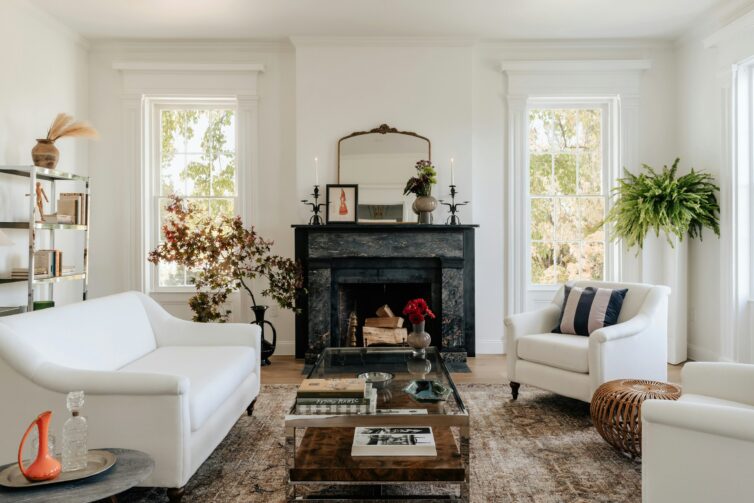
The restoration of a heritage property is a delicate dance between preservation and progression.
Tasked with retrofitting structures designed for a different era of living into homes that meet the rigorous thermal demands of the 21st century is no small feat. The standard “sealed box” approach favoured by modern new-builds – characterised by airtight membranes and synthetic skins – all too often proves catastrophic when applied to the breathable fabrics of a Georgian townhouse or a Victorian manor. This is the “Heritage Paradox”.
Traditional buildings were designed to breathe. Their solid masonry walls and lime mortars essentially act as a moisture-regulating lung. So, when we introduce modern, non-permeable insulation, we risk trapping interstitial condensation, leading to the rapid degradation of structural timbers and the inevitable appearance of damp. To ignore this is to invite rot; yet to over-insulate risks stifling the building’s soul.
The goal, therefore, is not to turn a heritage asset into a passive house, but to create a thermal envelope that still respects the building’s original DNA. To do so requires a holistic strategy built upon three distinct pillars: The Shell (Insulation), The Apertures (Glazing), and The Heart (Emitters). By balancing these elements, it’s possible to ensure the property remains a comfortable luxury residence without sacrificing its historical integrity.
Pillar One: The Breathable Shell
In high-end restoration, the wall dilemma is often the most contentious point of the specification. Standard PIR foam boards may offer excellent U-values, but they are the very antithesis of period-correct construction; rigid, impermeable, and prone to creating “cold spots” where they fail to meet the uneven surfaces of ancient masonry.
Instead, architects are increasingly turning to wood-fibre insulation and lime-hemp plasters. These materials share the same hygroscopic properties of the original structure, thereby allowing moisture to migrate through walls rather than pooling behind a layer of plastic. For developers, cork-based renders offer a unique solution: they provide significant thermal resistance and acoustic dampening while remaining entirely vapour-permeable.
The floor also demands a careful and nuanced approach. The instinct may be to rip up suspended timber floors and pour concrete, but this can (and very often will) push dampness into the base of the walls.
A more sympathetic route involves insulating between joists with sheep’s wool or installing a lime-crete slab. The latter provides a solid base that manages moisture naturally, often allowing for the discreet integration of underfloor heating in kitchens or hallways – though it lacks the reactive speed required for larger, high-ceilinged reception rooms.
Pillar Two: High-Performance Glazing & Draught Proofing
The eyes of a property – its windows – are where thermal efficiency often goes to die. For years, the choice was binary: retain those original single-glazed sashes and endure the draughts, or simply ruin the facade with bulky uPVC units.
The modern solution lies in vacuum-sealed Slimlite double glazing. These units are thin enough (often 10-12mm) to be retrofitted into original timber glazing bars, maintaining the correct sightlines while offering thermal performance that rivals modern triple glazing. When paired with professional draught-stripping, the transformation can be profound.
Designers should also look to the past for “low-tech” high-performance solutions. More than a stylistic choice, the resurgence of heavy, interlined thermal curtains is a legitimate architectural tool. A well-specified silk or velvet drape, interlined with a bump, acts as a secondary thermal barrier, significantly reducing heat loss through large Georgian bays during the evening hours.
To prevent the “stale air” issues common in tightened-up retrofits, we must incorporate passive ventilation or dMEV (decentralised Mechanical Extract Ventilation). These systems provide a constant, low-level air exchange that protects the fabric of the building and the health of its occupants without the intrusive ductwork of traditional MVHR.
Pillar Three: The Evolution of Emitters
A well-insulated shell is only as effective as the heat source that fills it. In large period rooms with high ceilings and significant volumes of air, standard thin-gauge steel radiators will quite often fail. They provide “convection” heat – essentially warming a thin layer of air that immediately rises to the ceiling, leaving the occupants in a cold pocket.
This is where the favourite of yesteryear, the cast iron radiator, can be an essential specification. The secret lies in thermal mass. Unlike steel, which cools rapidly, cast iron acts as a thermal store. It provides “radiant” heat, which travels in waves to warm the objects and the fabric of the building itself. This creates a deep, consistent warmth that penetrates rooms and persists long after the boiler or heat pump has cycled off.
From a design perspective, cast iron radiators also serve as a period-correct anchor. Whether it is a decorative Rococo style for a Victorian drawing room or a clean-lined Hospital pattern for a contemporary kitchen extension, these emitters celebrate the mechanical heritage of the building.
When calculating BTU requirements for period homes, remember to account for thermal bridges – those corners of the room or bay windows where heat loss is highest. Specifying a radiator with the correct mass and surface area ensures these cold spots will be effectively washed with radiant heat.
The final layer to consider here is control. For large manors or expansive townhouses, heating the entire building simultaneously is an ecological and financial folly. The integration of smart TRVs (Thermostatic Radiator Valves) allows for precise zoning, meaning guest wings, out-of-hours home offices, or formal dining rooms are kept at a background temperature, only ramping up to full comfort levels when occupied.
The Invisible Art of Restoration
The most successful renovations are those where the modernity is felt but never truly seen. By focusing on breathable insulation, high-performance glazing, and the superior thermal mass of cast iron radiators, it’s entirely possible to preserve the soul of a building while providing the comfort of a luxury home. After all, true period integrity doesn’t demand a commitment to living in a museum. The ultimate aim is to deliver a building that is liveable, efficient, and resilient for another century.