
Why are Geometric Designs Are Becoming a Go-To Interior Trend?
Look through today’s most considered interiors, and a familiar detail begins to emerge: geometric tiles, found in kitchens, bathrooms, living rooms, and outdoor spaces. Once a staple in traditional architecture, these patterned floor and wall surfaces are now being reworked in modern areas, offering structure, rhythm, and visual depth.
For many interior design enthusiasts, tiles are a way to express cultural influence and personal style within a space. You may ask, what sets this tilework apart, and how can it be used? The answers lie in understanding its history and practical application. Let’s take a look.
Patterns With Meaning: A Short History
The designs we admire today actually trace back centuries. In North Africa and parts of the Iberian Peninsula, artisans developed these intricate motifs as part of an artistic tradition that valued symmetry, repetition, and abstraction rather than realistic imagery. These tiles reflect cultural philosophies, mathematics, and storytelling embedded into architecture.
This focus on repetitive form and mathematical precision was a reflection of the culture’s values regarding harmony, infinity, and the beauty of order. This design became a hallmark of Moorish art and architecture, appearing on everything from grand palaces and mosques to small homes.
Practical Ways to Use Moorish Geometric Tile Designs
If you are planning to use these tiles in your next design project, here are a few practical ways to make use of these motifs:
- Accent Walls and Insets: For a more subtle look, use moorish geometric tile designs as an inset wall. This can be used to give a dramatic look to the fireplace or also as an accent wall. It introduces character while maintaining a calm atmosphere.
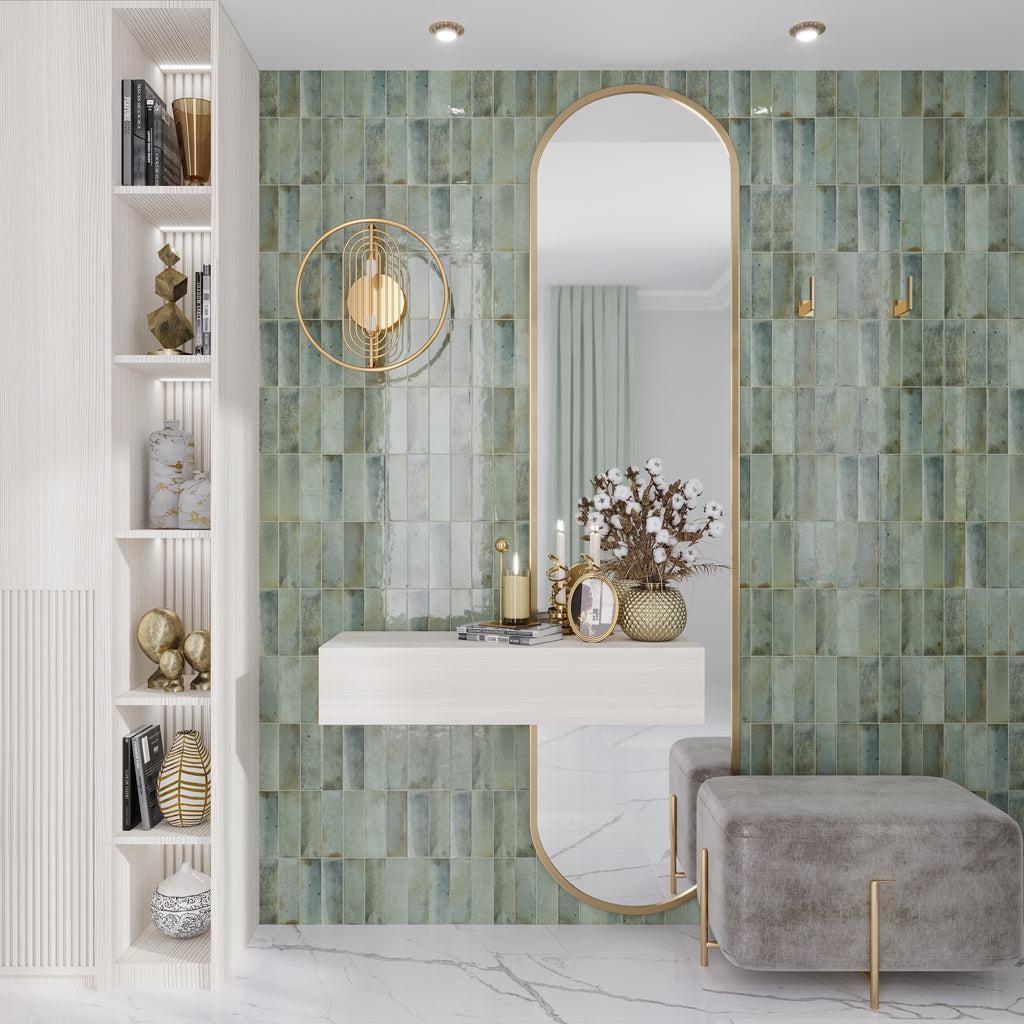
- Feature Backsplash: Use these tiles as a kitchen or bathroom backsplash. This helps create a frame for the room and provides a focal point, even if the overall décor is traditional or neutral. Moroccan-Zellige tiles can be arranged in any geometric pattern, from bold and colourful to soft and neutral layouts.
- Floors: Add some personality to your home through the use of a patterned floor. In a bathroom, entryway, or threshold leading outdoors, this floor style can establish continuity between spaces and make the transition feel smooth. Tiles with stars, polygons, and interlocking shapes look amazing on a floor that’s intended to be seen and felt.
Choosing the Right Look for Your Space
Moroccan-zellige tiles are not all the same, and choosing the right one depends on the room’s size, lighting, purpose, and the overall effect you want to create. Try paying attention to these aspects below:
1. Function and Maintenance Considerations
Use high-traffic rated tile floors for busy areas. Floors require more subdued patterns and finishes. Choosing the right layout, material, and colour of grout ensures that the tiles complement the function and aesthetic of the setting. Understanding these aspects of Moroccan tiles helps create an aesthetically pleasing and functional environment.
2. Material and Surface Finish
Ceramic, porcelain, and glass tiles all have the capacity to produce a wonderful finish. Glass and ceramic tiles have a glossy finish, which brings a shine to the colour and geometric shapes. Porcelain, on the other hand, is durable, making it a perfect option for floors and walls in kitchens and bathrooms.
3. Tile Sizes and Pattern Scale
The size of your tiles affects how the design will look. For instance, small tile sizes enable patterns to be perceived as continuous or detailed. Large tile sizes produce a contemporary look, a concept closely tied to scale and proportion in interior design.
4. Bold or Understated Look
Geometric shapes or striking colours immediately catch the eye. These are best used for feature walls or backsplashes within a defined setting where there is limited visual competition, such as a hallway or powder room. Subtle patterns, repeated shapes, and soft colour differences are better used within expansive floor designs, particularly within open-plan layouts, where cohesion is important.
5. Grout Colours and Joint Widths
Grout is important because it holds the tiles in place and gives the surface a finished look. A light colored grout highlights the tile shape, thus enhancing contrast. A darker grout colour will blend in with the tiles and won’t be as prominent. This will reduce the visibility of the edges of the individual tiles. Another aspect is the width of the grout joint. A narrow joint creates a cleaner look that is contemporary, while a wider joint accentuates the segmentation of the pattern.
6. Why Pattern Changes How a Room Feels
There is something unique about patterned surfaces. A tile used for a feature wall can create interest in the living room. The same tile can offer a zen-like feel in the bathroom. Designers talk about the emotional effect of decorative surfaces in terms of creating a feeling of ‘visual warmth’, a space that is curated versus one that is assembled. Adding personal touches such as artwork further enhances individuality and uniqueness.
Conclusion
After years of simple decor, it’s a welcome change to see design leaning back into history and detail. Geometric tiles have been around for centuries and have a depth and beauty to them. They add depth and movement to a space. If you’re planning a renovation or just looking to refresh a small area of your home, geometric tiles and colour can change the feel of a room. At times, it only takes one good design to change the feel of your home and make it feel more personalised.