
A garden that works beautifully can lift your life, as well as the appearance and value of your home.
Done well, garden renovations pay back in multiples: a space you’re proud of, memories worth making, and a compelling case to any future buyer.
Almost seven million UK homeowners planned to renovate within two years, Aviva reported in 2025. Recent data from Hillarys found that garden makeovers are the second most popular renovation project on Pinterest. That said, it’s all too easy for garden renovations to drift quietly down the list.
So, if you’re already thinking about work on your home, this summer is the perfect time to start planning the garden too. Spend time there, noticing what your ideal space would offer, and reflecting on what currently works and what doesn’t. Now is ideal for planning an autumn renovation — the season that offers the best conditions for sustained outdoor work.
The best place to begin is the way you actually use the garden. Which direction does the sun move across your garden, and when do you most want to be outside? Are there areas that feel overlooked or wasted? What would make you reach for the patio door more often on an ordinary Tuesday? These are the questions that will help create a garden that feels like a genuine extension of your home.
A garden renovation can make your home easier to use
For many homes, a good garden renovation starts with making the space easier to live in rather than reimagining it entirely. But beyond the practical changes, it’s also about thinking carefully about how you want to use the space and how the inside of your home connects to the outside. The view through a kitchen or living room window, how naturally the back door leads you out, the way a seating area draws you in from inside; these details will shape how you use and enjoy your garden in day to day life.
Start with how the garden works now. Thinking about sightlines, access, sunlight and how indoor living flows outside early on will help bring the home and garden renovation together. Notice where the sun falls. Look at where people naturally walk. Think about whether the current layout makes sense when you are carrying food outside, watching the children play or trying to sit out of the wind. These details matter more than picking furniture first and hoping it fits into your final project.
Think about how you actually use the space
It may sound obvious, but before spending money, be honest about what you need from the garden.
Some people want a proper dining area because they eat outside often. Others need a small table for drinks, a bench in a sunny corner or a few moveable chairs that can be stored away in winter. A family garden may need open space for children. A smaller courtyard might need compact furniture and vertical planting to avoid feeling crowded.
There is no single right setup. The best garden layout is the one that matches your routine.
Ask yourself:
- How many people normally sit outside?
- Do you need a dining table, or would low seating work better?
- Where does the garden get the most sun?
- Is there a windy corner to avoid?
- Do you need storage for cushions, toys, tools or barbecue equipment?
- Is the furniture going on patio, decking, gravel or lawn?
These questions will stop you from buying items that look good online but make the garden harder to use.
Equally important, keep a photo collection of the styles you like so you can take inspiration on anything from paving to planting and where the furniture sits amongst it all. AI can help you visualise the final space, but it can’t give you the unique details on plants that will thrive and the layout that will best match your lifestyle.
Choose garden furniture that complements the space
Measure the area before buying anything. Mark it out with tape, string or plant pots if that helps you picture the space. This will help you pick the right furniture for your space.
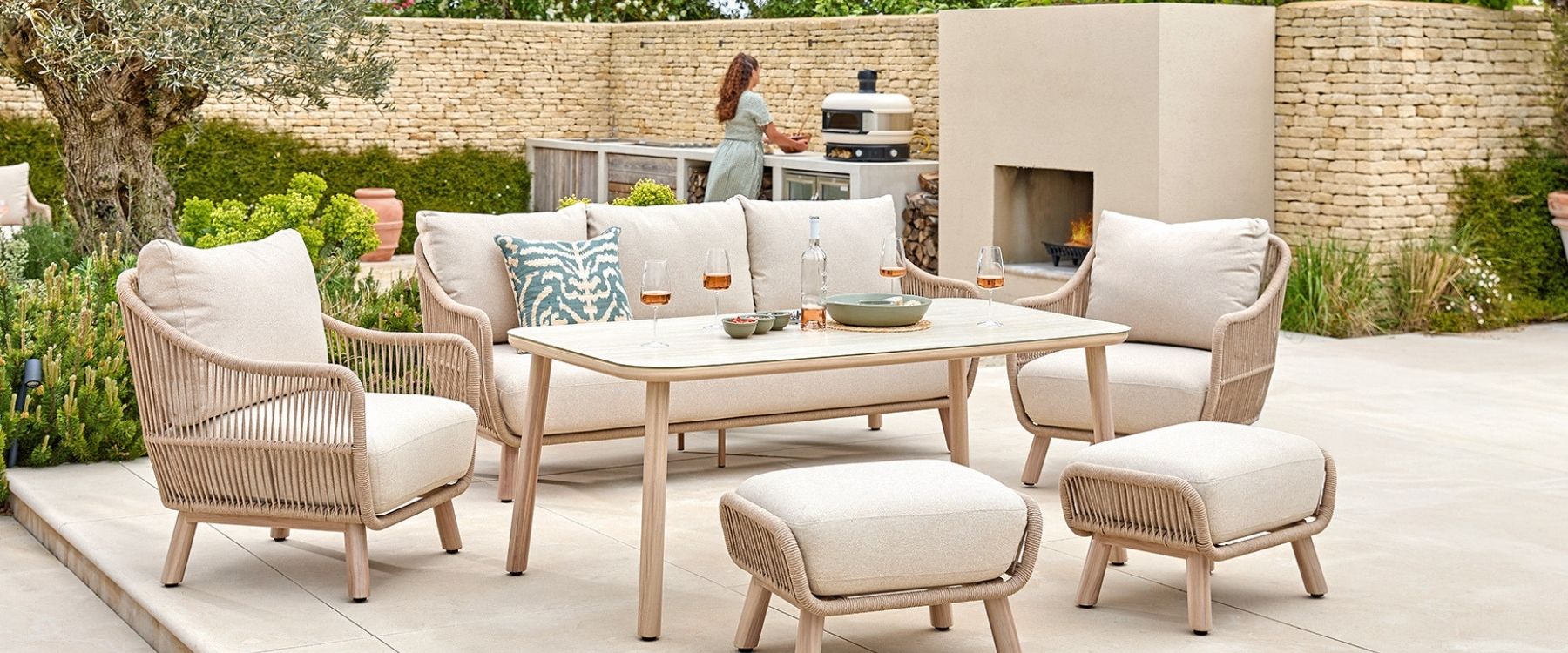
Think about the use that you want to make out of the garden; outdoor conversation sets, such as the ones available at Gardenesque can be great if you are picturing a place to enjoy a morning coffee or a drink after work, and they sit beautifully in smaller spaces.
Corner sofas can work in larger gardens, but they need careful placement. If they block the route through the garden or dominate the patio, they may disrupt the flow of space by closing off pathways. Think about the view from the house, too. Large furniture can make a small garden feel smaller when it sits directly outside the back doors.
The furniture should support how you use the garden, not dictate it.
Prioritise layout before styling
Before thinking about new furniture, it’s worth stepping back and looking at the garden as a whole. How the space is laid out, where the sun falls, and how you naturally move through it will shape everything else. Getting that foundation right first means that when you do come to choosing furniture, you’ll be set to make the best decision.
Before adding new items, check these priorities
- Is the ground level enough for tables and chairs?
- Does water drain away properly?
- Are the boundaries secure?
- Is the decking safe when wet?
- Can you reach the seating area easily from the house?
- Is there enough shade on hot days?
- Is there a dry place to store garden items?
- Do you benefit from privacy or will you want to add extra screening?
Asking yourself these questions will put you in a great position when it is time for the makeover.
Use planting to make hard areas feel less bare
A garden renovation can involve plenty of hard materials, especially if you are adding paving, decking, fencing or furniture. Planting helps stop the space feeling flat.
Repetition in planting is one of the simplest ways to make a space feel considered. Using the same plant or pot in two or three spots around the garden creates a sense of rhythm and cohesion, tying different areas together without the space feeling too designed or contrived.
You do not need a complicated planting scheme. A few large pots near the seating area can make a patio feel more settled. Climbing plants can soften fences. Herbs near a dining table can be useful as well as good to look at. Low-maintenance shrubs can add structure without needing constant attention.
Choose plants based on the amount of light the area gets. A sunny patio will suit different plants from a shaded side return. If you know you will not water pots every day in summer, choose tougher plants and larger containers that hold moisture for longer.
Planting should work with the furniture layout. Leave enough room to walk around pots, chairs and tables. A crowded patio can quickly become frustrating, especially when people are carrying plates or drinks.
Don’t neglect the front garden
It is easy to focus all your attention on the back garden and forget about the front entirely. But the front of the house sets the tone before anyone steps inside, and a little thought goes a long way. A well-kept front garden or entrance, even a simple one, makes a home feel cared for and welcoming, whether you are looking to sell or simply want to enjoy coming home.
A few well-chosen plants in good-sized pots, either side of the front door, a clean path, and tidy boundaries can make a real difference to how the whole house feels from the street. It doesn’t need to be complicated, just considered.
Be intentional about the lighting you add
One of the best ways to get more from your garden is to think beyond the summer months and the hours of daylight; with the right lighting and heating, an outdoor space can be just as inviting in early autumn as it can be in July.
Think about lighting the way you would inside the house: layered, considered, and chosen for how it makes the space feel.
The direction of a light source, the bulb tone, the way a wall light sits against the masonry — these small decisions make a garden that’s beautiful after dark, not just visible.
Even a security light can play its part quietly, without breaking the spell.
Make the garden part of your renovation plan
A garden renovation can be a fun, inspiring, and at times, complicated project – but incredibly worthwhile. To make it simpler, start with the space you have. Fix anything unsafe or awkward. Choose furniture that fits. Plan storage before you need it. Add planting and lighting where they help and add to the feel of the space, and you can have a positive impact on the value of your home and the life you lead within it.
The best gardens are usually the ones that are designed around the way people naturally live outdoors. They have enough seating, enough space to move and enough thought behind the layout, plus feel lived in without being overly designed. When those basics are right, the garden becomes a part of the home that people use properly, rather than an area that keeps getting pushed down the list.