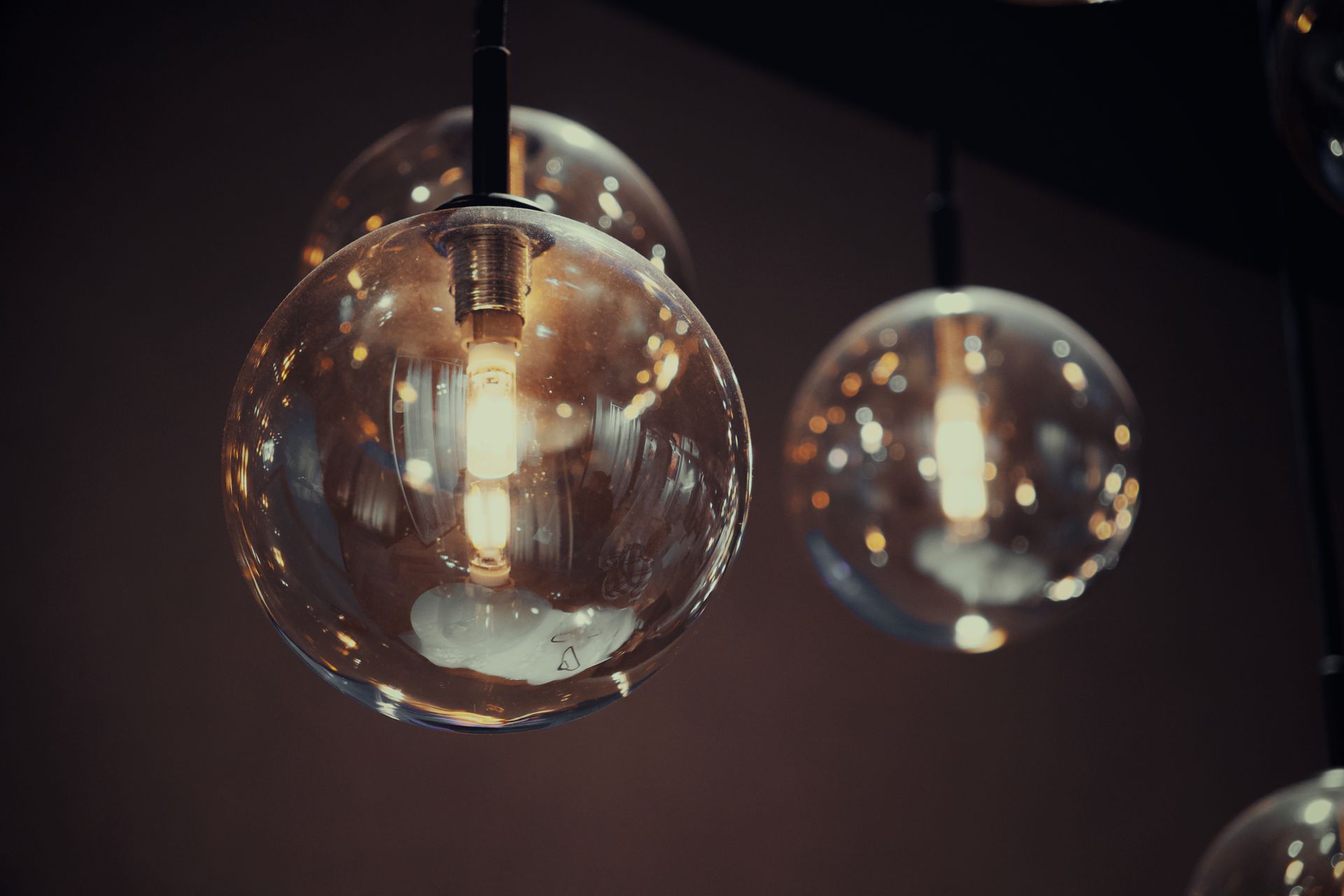

Most of us choose lighting for how a room looks: warm pendants over the dining table, a statement floor lamp in the corner. But lighting also decides how hard your eyes work every day. Harsh glare, dim corners and screens glowing in a dark room can leave eyes tired and dry by the evening.
The good news is that eye-friendly lighting does not mean giving up style. A few design choices, from layering light to controlling glare, can make a home easier on your eyes. This guide covers what to change, room by room, and what to do when lighting alone is not enough.
Why Lighting Affects Eye Comfort
Your eyes constantly adjust to the light around you. When a room is too dim, they work harder to pick out detail. When it is too bright or uneven, they have to cope with strong contrast, such as a bright window behind a dark wall, which is tiring over time.
The Society of Light and Lighting, part of CIBSE, publishes guidance on good lighting practice, and the principles are consistent: enough light for the task, comfortable contrast, and as little glare as possible. You do not need specialist equipment to apply them at home. You need to think about where light comes from and what it falls on.
Layer Your Lighting
A single ceiling light rarely does the job. Interior designers often use layers, and the same approach helps your eyes.
- Ambient lighting gives the room a soft, even base. Ceiling fittings, wall lights or uplighters all work.
- Task lighting focuses light where you need it, such as a desk lamp, reading light or under-cabinet strip in the kitchen.
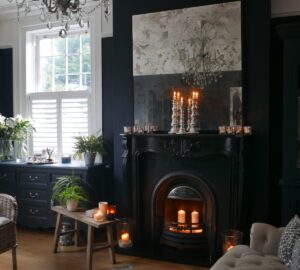
- Accent lighting adds atmosphere with picture lights or lamps, and it works best when it is not the only light in the room.
Dimmers are one of the simplest upgrades. They let you lower the light in the evening and raise it for close work, so you can match the lighting to the moment rather than living with one setting.
Tackle Glare: Surfaces, Windows and Screens
Glare is light that is too bright or reflected in the wrong place, and it is a common cause of squinting and discomfort. It can come from bare bulbs, shiny surfaces and windows.
A few design fixes help:
- Choose shades or diffusers so bulbs are not directly visible.
- Use matt finishes on worktops, walls and floors where you do a lot of reading or screen work, since glossy surfaces can reflect light into your eyes.
- Fit blinds or sheer curtains to soften strong sunlight.
- Position screens side-on to windows, not directly in front of or behind them.
Some people notice glare more than others. If bright lights seem to have halos or streaks, or night-time lighting feels harder to cope with, that can be linked to a vision condition such as astigmatism, which affects how light focuses on the eye. In that case, lighting is only part of the picture. Many people with astigmatism look into contact lens options for astigmatism, such as toric lenses, which are designed to correct the uneven curve of the eye. Whether they suit you depends on your prescription and eye health, so an optician should advise.
When Better Lighting Is Not Enough
Good lighting reduces strain, but it cannot correct a vision problem. If your eyes still feel tired, you get frequent headaches, or you squint at screens in good light, it is worth getting an eye test.
According to the NHS, astigmatism is a common condition that can cause blurred or distorted vision, and it is diagnosed through an eye examination. It is often corrected with glasses or contact lenses, and some people also consider refractive surgery.
If you are exploring contact lenses astigmatism prescriptions require, your optician will measure both the lens power and the axis. Some practical points:
- Toric contact lenses are shaped to stay correctly positioned on the eye, unlike standard spherical lenses.
- Daily contact lenses for astigmatism are worn once and thrown away, so there is no cleaning routine, which many people prefer for convenience.
- Toric daily contact lenses combine the toric design with a fresh lens each day.
- If you are searching for contact lenses for astigmatism UK suppliers stock, check that the range covers your exact prescription.
Glasses are also a perfectly good option, and many people switch between glasses and astigmatism contacts depending on the day.
Lighting Your Home Office and Reading Spots
Working from home puts new demands on lighting, and it is where eye strain often shows up first. The Health and Safety Executive publishes guidance on display screen equipment, and it covers practical points such as screen position, breaks and lighting in the workspace. You can read its advice on working safely with display screen equipment.
At home, a few habits go a long way:
- Light the room so your screen is not the brightest thing in view. A softly lit room around the screen is easier on your eyes than working in the dark.
- Add a task lamp for paper work and reading, angled to avoid shining directly into your eyes or onto the screen.
- Keep your screen about an arm’s length away, and slightly below eye level.
- Take regular breaks. The 20-20-20 habit, looking at something about 20 feet away for 20 seconds every 20 minutes, is a simple reminder.
For reading spots, a lamp beside or slightly behind your shoulder gives good light on the page without casting shadows.
A Quick Room-by-Room Checklist
- Living room: layer ambient and accent lighting, and use dimmers for evenings.
- Kitchen: add under-cabinet task lighting over worktops where you chop and prep.
- Bedroom: choose warm, low-level lighting for winding down, with a reading light that does not disturb a partner.
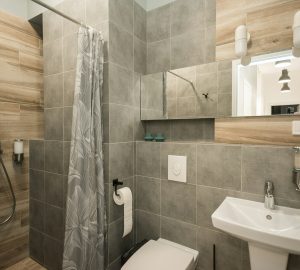
- Bathroom: use even lighting around the mirror, so you are not working in your own shadow.
- Home office: control window glare, add a task lamp, and avoid working in a dark room.
- Hallways and stairs: keep them well lit, so you can see steps and edges clearly.
Frequently Asked Questions
Does the colour of light bulbs affect eye strain?
Many people find warmer light more comfortable in the evening and cooler, brighter light more useful for task work. It is mostly a matter of personal comfort, so a mix with dimmers lets you adjust.
Do blue light bulbs or screens damage your eyes?
The evidence on blue light is mixed, and the main drivers of digital eye strain are long screen sessions, reduced blinking and poor lighting. Regular breaks and good lighting are the most reliable help.
Can better lighting fix astigmatism symptoms?
Lighting can make you more comfortable, but it cannot correct astigmatism. An eye test is the way to find out whether you need glasses or contact lenses.
How often should I have an eye test?
Most adults are advised to have one at least every two years, though your optician may recommend a different interval.
Designing for Comfortable Eyes
Lighting is one of the quickest ways to make a home feel better, and it is also one of the easiest ways to look after your eyes. Layer your light, control glare, light your workspace with care, and take regular breaks. If strain still lingers, an eye test can tell you whether a vision correction would help. A home that looks good and feels easy on the eyes is well within reach.